
What Causes Heart Disease? The Talk I Want You to Watch
I don’t often hand my blog over to someone else’s ideas, but this talk earned it.
Ivor Cummins is an engineer, not a doctor, who spent years digging into what drives heart disease. In this talk to a room full of paramedics, he argues that the standard cholesterol test misses most of the story. He says the eating patterns that pile on weight are also working on your heart.
I’m not a doctor either. When I lost over 100 pounds, I was changing my eating for the scale, to fix my energy, and this talk shows there was more going on than the number. Watch it when you have half an hour.
▶ Watch the talk: “Wanna know how to collapse your heart disease risk?” by Ivor Cummins
10 points that stuck with me
Here’s what he says:
- Heart attacks are common, and he believes most can be prevented. Over a third of people have one before 70, and many are fatal.
- Cholesterol isn’t the villain. Every cell in your body needs it, and your body makes most of it on its own.
- The standard “bad cholesterol” number predicts heart attacks poorly, unless it’s extremely high.
- Insulin resistance is the real driver, according to the cholesterol specialist he quotes.
- Too many carbs and too much sugar build that resistance over years, until it turns into type 2 diabetes.
- Diabetes gets caught late. Insulin goes wrong decades before blood sugar does, so many people are “hidden diabetics.”
- Belly fat is a warning sign, and it sends out inflammatory signals of its own.
- The causes he lists are ones you can work on: sugar, refined carbs, vegetable oils, low vitamin D and magnesium, poor sleep, too little movement, stress and smoking.
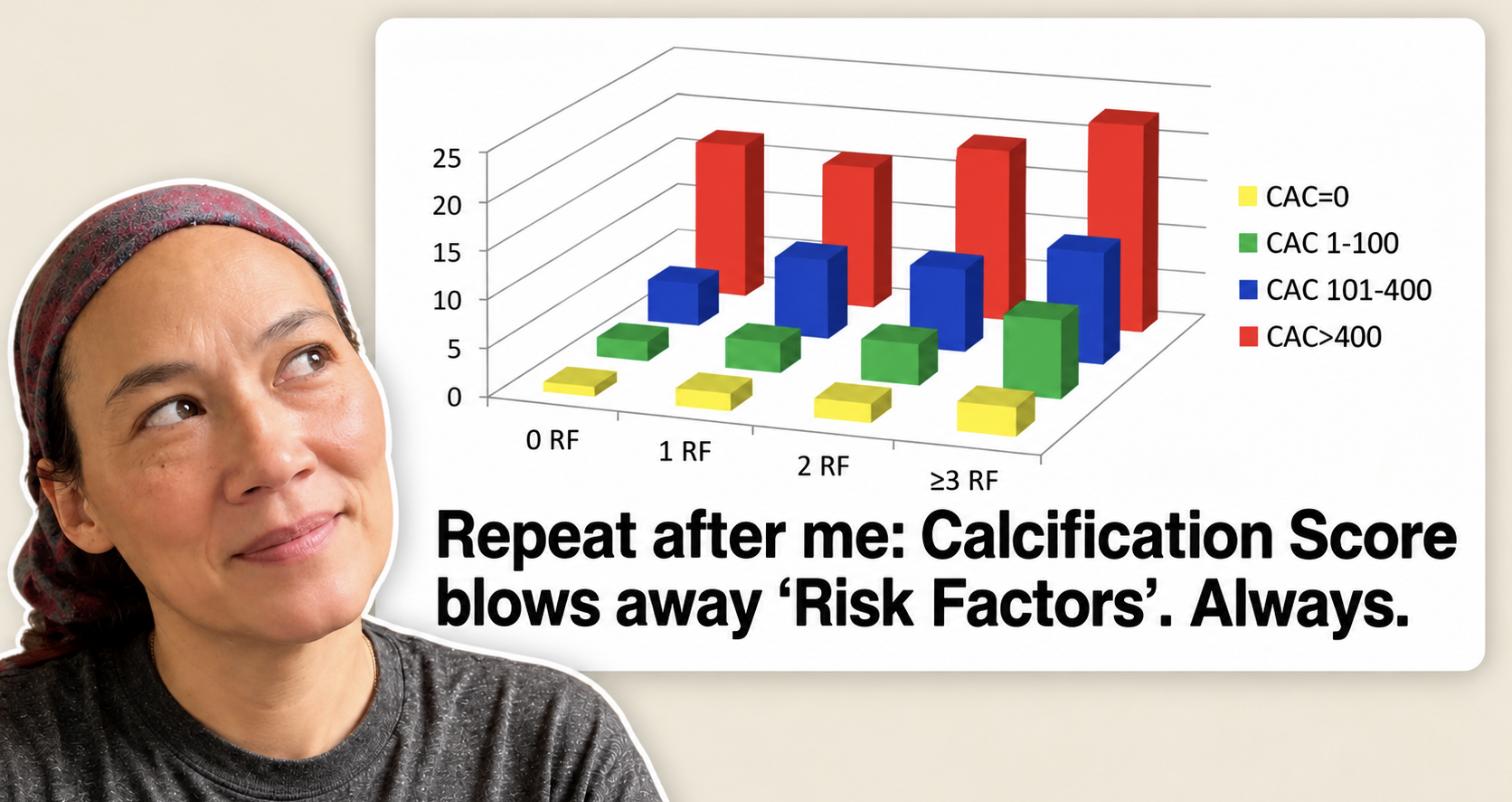
- A coronary calcium (CAC) scan shows what’s actually in your arteries. The usual risk score is a statistical guess from a few questions.
- A zero calcium score works like a warranty: about 15 years of low risk, or 4–5 years for people with diabetes.
In Short: Ivor’s message is that heart disease isn’t a lottery, and it isn’t only about cholesterol.
How we eat, sleep, move and handle stress all feed into it, and every one of those is something you can start changing today.
You don’t have to fix everything at once. Pick one thing, like cutting back on sugar, adding a daily walk or getting to bed earlier, and build from there. If anything here raised a question about your own heart, take it to your doctor. Asking is how you find out.
Which of these ten points surprised you the most? Tell me in the comments below.
Hop on my email list and get my 10 habits and food swaps — what I’d do now if I were 100 lbs overweight and feeling weak and ill. Join my list here →